
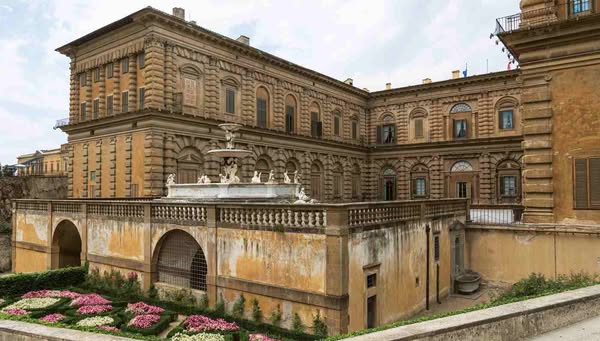
Pitti Palace: a journey through time and art in the heart of Florence
The Pitti Palace (Palazzo Pitti) in Florence is a historical and cultural architectural masterpiece, standing tall on the Southern Bank of the Arno River. The Palace represents more than just a building, it is a journey through time, embodying the history of noble Florentine families, the splendor of Renaissance art, the beauty of the gardens Italian Classics.
A Brief History
- The construction of the palace began in the middle of the XV century commissioned by the Florentine banker Luca Petit, but he could not see the palace in all its splendor. Shortly after his death, the palace was sold to the powerful Medici family in 1549, becoming the main residence of the ruling family of Florence.
- Over the centuries, the palace has undergone numerous expansions and modifications, various layers of architectural and artistic styles have been added to it. Under the rule of the Medici family, the palace was transformed into a vibrant cultural and political center, which houses valuable art collections, hosts lavish receptions, witnesses important historical events.
Artistic and architectural treasures
- Today the Petit Palais houses five main museums, each of which offers a unique experience to the visitor.
Palatine Gallery
- The Palatine Gallery (Galleria Palatina) is considered the jewel of the palace, it houses an impressive collection of paintings dating back to the Renaissance and Baroque eras, including works by such great artists as Raphael, Titian and Rubens. These paintings are exhibited in the luxuriously decorated rooms of the palace, creating a unique atmosphere of luxury and beauty.
Gallery of Modern Art
- The gallery of Modern Art (Galleria d'arte Moderna) offers a glimpse into Italian art of the XIX and early XX centuries, focusing on the works of the “macchiaioli” art movement.
Museum of costume and fashion
- The Museum of fashion and fashion (Museo della Moda e del Costume) reviews the history of Italian fashion from the XVIII century to the present day, featuring an impressive collection of clothes and accessories.
Museum of the great Treasury
- The Museum of the great Treasury (Tesoro dei Granduchi) displays an amazing collection of jewelry, precious stones and works of art made of precious materials, which were owned by the Medici family.
Porcelain museum
- يضم متحف البورسلين (Museo delle Porcellane) مجموعة كبيرة من البورسلين الأوروبي والشرقي، بما في ذلك أعمال فنية نادرة من مصانع مشهورة مثل مايسن وسيفر.
Boboli Gardens: a haven of tranquility and beauty
- A visit to the Pitti Palace is not complete without exploring the magnificent Boboli Gardens (Giardino di Boboli), which stretch behind the Palace on a vast territory. The Boboli Gardens are one of the oldest and most famous Italian gardens, representing a masterpiece of landscape design.
- The gardens are distinguished by their harmonious design, magnificent fountains, elegant statues, hidden caves, spacious greenery. The gardens offer visitors a haven of tranquility and beauty, the opportunity to admire the picturesque views of the city of Florence.
Tips for visitors
To make the most of your visit to the Petit Palace, it is preferable to devote a whole day to exploring the palace, its museums and the Boboli Gardens.
Entrance tickets to the palace and museums can be purchased online in advance to avoid crowding.
It is recommended to wear comfortable shoes, as exploring the palace and Gardens requires long walks.
Do not forget to bring your camera to take souvenir photos of this architectural and artistic masterpiece.
In the palace and gardens there are many cafes and restaurants offering snacks and drinks.
The Petit Palais is andA tourist destination Not to be missed in Florence, it combines history, art and beauty in one place, making it an unforgettable experience.